Electronic logging devices stopped being a talking point years ago. They are simply how hours of service are recorded now, and most carriers have long since stopped thinking about them. That comfort is worth revisiting, because what auditors expect from ELD data in 2026 is not what they expected when the mandate landed.
Compliance is the floor, not the goal
The baseline has not changed much. An ELD connects to the engine and captures driving time, engine hours and duty status automatically, without manual entry. Drivers subject to hours-of-service rules need one, with the familiar exemptions for short-haul operations, pre-2000 vehicles, and drivers who keep records of duty status eight or fewer days a month.
The penalties have teeth. Civil penalties reach $5,000 per violation, and a driver operating without a valid record of duty status can be placed out of service under CVSA criteria on the spot. An audit finding can trigger a conditional safety rating, which restricts operating authority — a consequence that outlasts any single fine.
What has shifted is the expectation of how ELD data connects to everything else.
The registration list is not static
One detail that catches carriers out: a device being certified once does not mean it stays certified. FMCSA periodically revokes registrations when providers fail to correct identified deficiencies, and carriers running a revoked device after the stated deadline are in violation of 49 CFR 395.8(a)(1) — no record of duty status — with drivers placed out of service accordingly.
The revocations are published, and there is usually a window to migrate. But the responsibility to check sits with the carrier, not the provider, and a device that has quietly dropped off the registered list will not announce itself at the roadside.
Checking the registered ELD list against your own fleet is a fifteen-minute task. It is worth putting on a calendar rather than trusting that someone would have mentioned it.
ELD and DVIR are converging
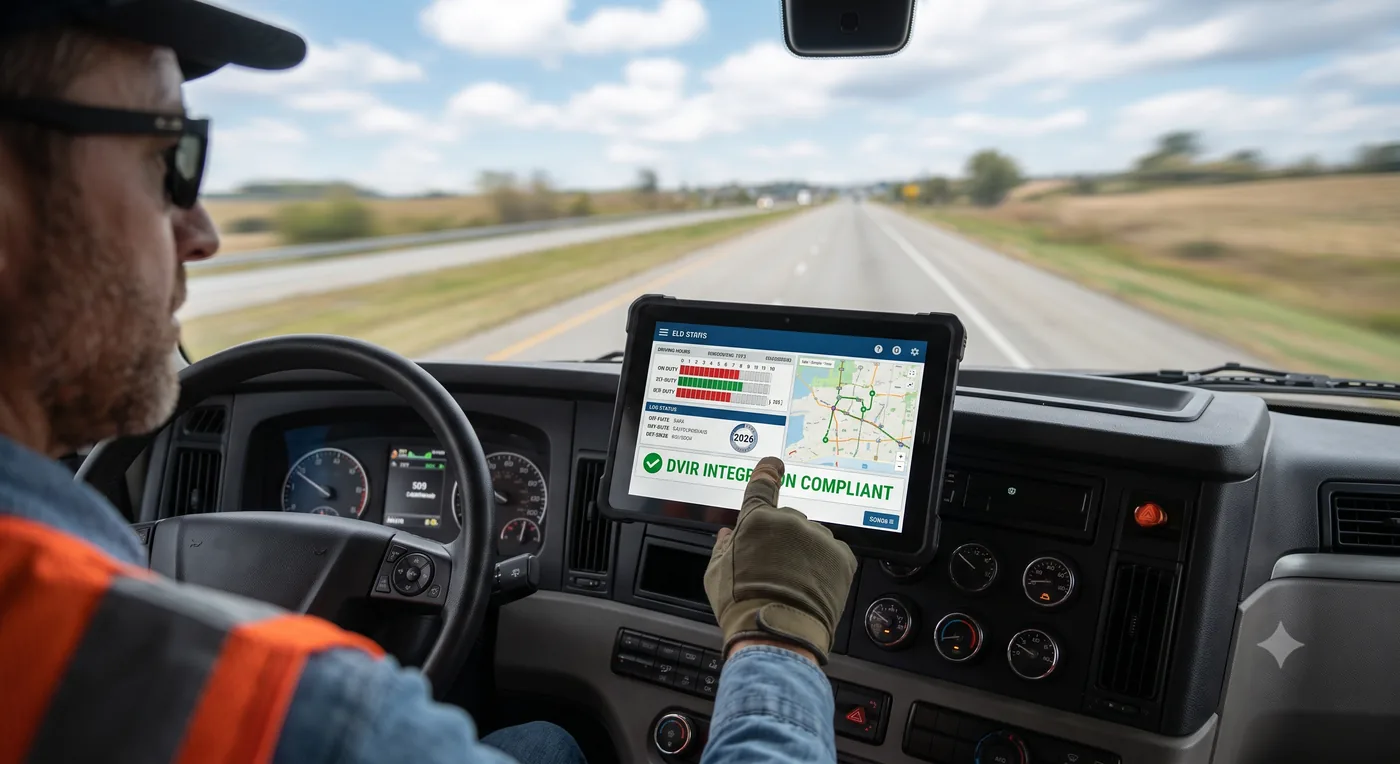
The more significant 2026 development is the formalisation of how ELD and electronic DVIR data relate to each other. Agencies increasingly expect inspection reports to reference hours-of-service data and vice versa — that the record of who was driving, for how long, and in what condition the vehicle was, forms one connected picture rather than two filing systems that happen to describe the same truck.
Carriers running integrated systems demonstrate a materially stronger compliance posture during an audit. Not because the underlying operation is safer, necessarily, but because the evidence is coherent. When an auditor can follow a defect from the inspection that found it, through the driver who logged it, to the shipment that was moving at the time, the answers arrive in minutes rather than days.
When those records live in separate systems, every audit question becomes a reconciliation exercise. That is where findings come from — not usually from wrongdoing, but from gaps that nobody can close quickly enough.
Retention is a real requirement
ELD data must be preserved for a minimum of six months, and your provider must be able to retrieve it reliably. Data loss is not a technicality; it produces the same outcome as never having recorded the data.
Worth asking your provider directly: where is the data held, how is it backed up, and what happens to your historical records if you switch platforms? The last question is the one that gets the vaguest answers, and it is the one that matters most if you ever do move.
The data is more useful than the mandate suggests
Carriers who get real value from ELD data use it for more than staying compliant. Idle time, driving patterns, fuel consumption and accurate hours records are the raw material for scheduling decisions that actually reflect what the fleet can do.
Dispatchers working from accurate remaining-hours data stop planning loads that were never legally deliverable. That single change removes a class of failure that used to look like a driver problem and was really a planning problem.
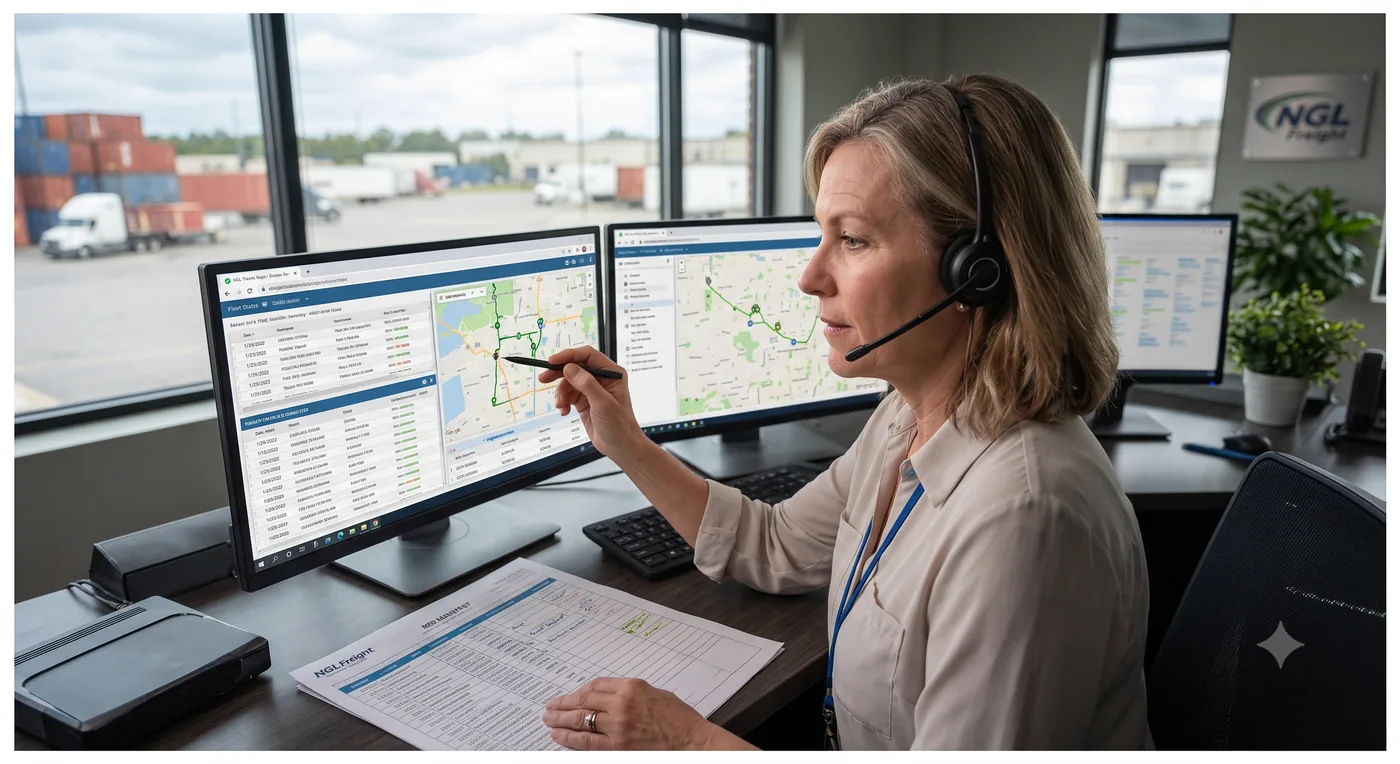
The same data supports increasingly accurate arrival prediction. Platforms combining live position with historical on-time performance now generate dynamic ETAs accurate to within about fifteen minutes up to two hours ahead — which is precise enough to be worth telling a customer.
Those same position records have a second use: they are the evidence base for disputing incorrect detention charges.
What good looks like
A fleet in reasonable shape can answer these without a search:
- Is every device in the fleet currently on the FMCSA registered list?
- Can an inspection defect be traced to the driver and shipment it relates to, in one place?
- Is duty-status data retained for at least six months and retrievable on request?
- Do dispatchers see remaining hours before assigning a load, not after?
NGL FreightMate® was built so that inspection records, duty status and shipment execution reference the same shipment rather than sitting in parallel systems. The compliance benefit is real, but the operational benefit is the one people notice: fewer surprises, and faster answers when someone asks.
Get in touch if you would like to see how that fits your current setup.